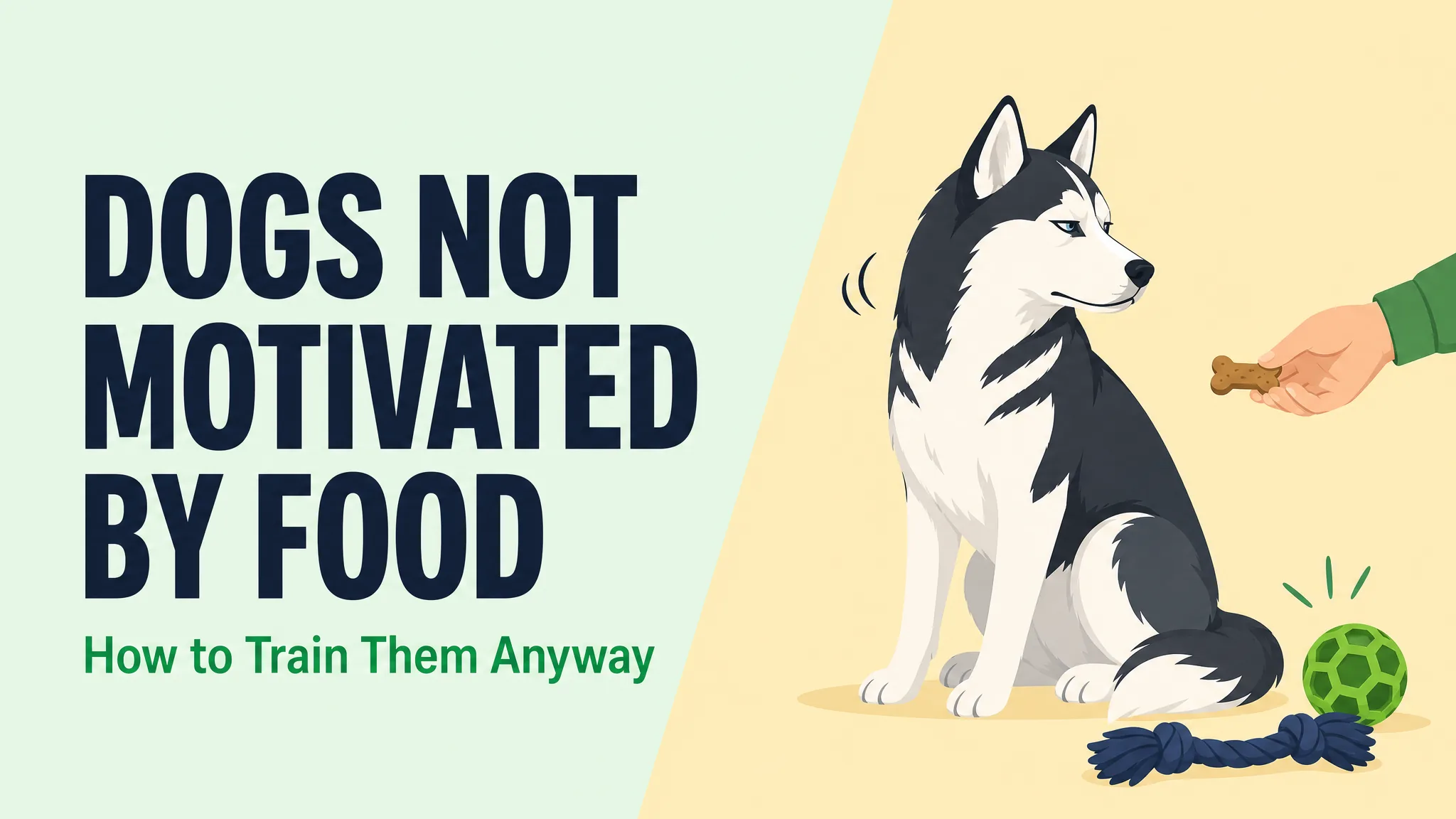
Dog Breeds Not Motivated by Food (And How to Train Them)
Most dog training advice assumes food motivation. 'Use high-value treats' fails completely when your dog won't work for chicken, hot dogs, or even steak. Some breeds genuinely don't have strong food drive — and traditional reward-based training falls apart with them. The protocol below works for the breeds that don't follow the script.
Why Some Breeds Don't Care About Food
Three patterns: independent breeds (Huskies, Akitas) prioritize their own choices over rewards, satiety-prone breeds (some sighthounds) reach 'full' faster than food drive lasts, and specialty drives (working breeds with strong prey/play drive) prefer toys, work, or chase over food.
1. Siberian Husky
Huskies will work for food when they're hungry — but their food drive shuts off the moment they're not. They prefer running, chasing, and pulling over treats. Use play and access rewards (free-running time, pulling work) instead. See full Husky training guide →
2. Akita
Independent breed with low food drive. Akitas eat when they're hungry and ignore treats when they're not. Use relationship-based training — the dog's bond with the handler is the primary motivator. See full Akita training guide →
3. Shiba Inu
Cat-like dogs with low food drive. Shibas are notoriously hard to train with treats. Use life rewards — opportunities to do what they want (sniff, explore) become the reward.
The Training Program We Recommend
Step-by-step training program with breed-specific video demos and lifetime access. Used by 50,000+ dog owners.
Ancient breed with strong independent streak and modest food drive. Use environmental rewards — sniffing, exploring, and prey-based play.
5. Afghan Hound
Sighthounds bred for the chase. Food motivation is weak; chase rewards (lure coursing, fast cat) work where treats fail.
6. Greyhound (Retired Racing)
Many retired racing Greyhounds have low food motivation due to their kennel feeding patterns. Couch time and gentle play are often more effective rewards than treats.
Sighthound with low food motivation. Lure coursing and chase-based rewards work where treats don't.
10. Anatolian Shepherd
Livestock guardian with independent temperament. Food drive is moderate at best — use relationship and routine as primary motivators.
Frequently Asked Questions
What if my Lab/Golden won't take treats during training?
Three usual causes: not hungry (skip a meal before training), too high stress (lower distraction level), or wrong reward type (try real meat). Most retrievers are highly food-motivated when these factors are addressed.
Can I train without food rewards at all?
Yes — for breeds that aren't food-motivated, you must. Use play, toys, life rewards, and relationship as the primary currency. Praise alone usually isn't enough; you need genuine rewards the dog values.
What's the most reliable non-food reward?
For most non-food-motivated dogs, play with a tug toy or ball is the closest equivalent to food motivation. It's portable, repeatable, and intensely valued by most working/independent breeds.
Are these breeds untrainable?
No — they require different methods. Independent breeds need handlers who understand motivation rather than commands. Working-drive breeds need rewards that match their genetics. Once you understand the dog's currency, training works.
Ready to Start Training?
The complete training program covers every breed, every command, every behavior fix.
Disclosure: We earn affiliate commissions when readers buy through some links on this site, at no extra cost to you. Our editorial recommendations are independent.