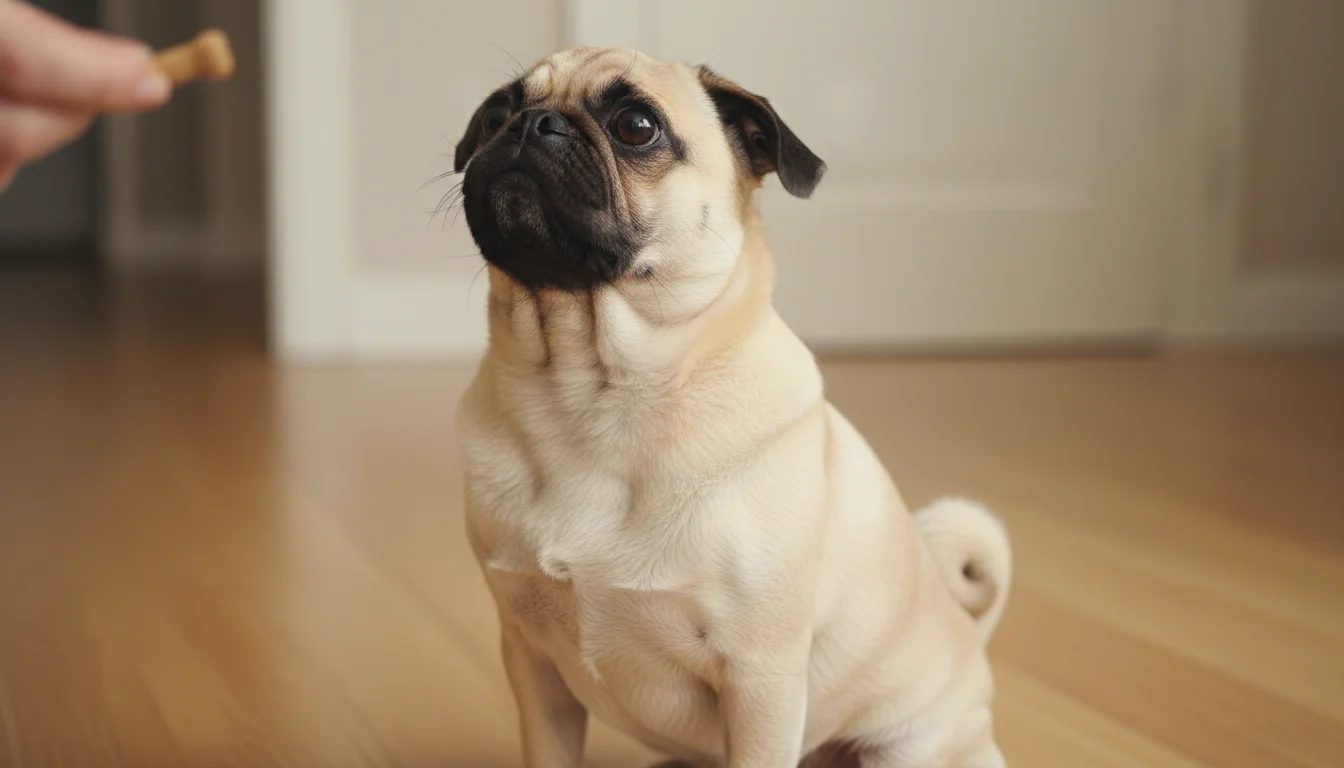
Pug training is mostly an exercise in motivation. Pugs are intelligent enough to learn anything, food-driven to a fault, and form deep bonds with their owners — but they're also stubborn, easily distracted, and prone to overheating during outdoor training. The breed's flat face limits exercise tolerance, so most Pug training happens indoors in short, treat-fueled sessions.
The Training Program Pug Owners Use
Step-by-step program designed for breed-specific challenges. Used by 50,000+ dog owners.
Pugs were bred as Chinese imperial lap dogs — they're companions, not workers. Without genetic motivation to please a handler, they need a clear personal benefit to comply (read: treats). Use real meat for high-value rewards, keep sessions to 5–8 minutes, and accept that off-leash reliability is rarely realistic. Pugs train best with patience, consistency, and an understanding that they will sometimes simply choose to ignore you.
The Brachycephalic Training Limit
Pugs are flat-faced and cannot regulate body temperature well. Train indoors when temps exceed 75°F, in short sessions, and watch for excessive panting or thick saliva — signs of overheating. Avoid hard exercise immediately after eating. The breed's exercise tolerance is modest (20–30 minutes daily of moderate activity), but mental work via training fills the rest of their stimulation needs without the heat risk.
Potty Training a Pug
Pugs are slow to potty train — plan for 4–6 months of consistent work with full reliability sometimes taking up to a year. Strict schedule (every 2 hours for puppies), crate training, and high-value rewards for outdoor success. Cold or wet weather makes Pugs reluctant to go outside, leading to indoor accidents. A covered potty area and quick outdoor trips help.
Pug Training Strengths
Affectionate and bonded to family
Highly food-motivated for high-value treats
Adapts well to apartment living
Pug Training Challenges
Slow to potty train (4–6+ months)
Heat-sensitive — limits outdoor training
Stubborn — won't work for low-value rewards
10-Week Pug Training Checklist
Track your Pug's progress through the foundational commands. Check each one as your dog reliably performs it in low-distraction environments.
Get the Complete Pug Training System
Breed-specific training program with day-by-day instructions, video demos, and lifetime access.
Yes, harder than average. Pugs are intelligent but stubborn and easily distracted, with low natural motivation to please. With high-value treats, very short sessions, and consistency, basic obedience is achievable.
How long does it take to potty train a Pug?
Plan for 4–6 months, sometimes up to a year. Strict scheduling, crate training, and consistency are non-negotiable. Many Pug owners report breakthrough at around 6 months when bladder control develops.
When should I start training my Pug puppy?
8 weeks. Begin with crate training, potty schedule, and name recognition. Add sit and come gradually. Sessions should be very short (3–5 minutes) for young puppies.
Why does my Pug ignore me?
Usually low reward value or session fatigue. Pugs require high-value treats (real meat) — kibble rarely cuts it. They also tune out fast: 5 focused minutes beats 15 frustrated minutes.
Disclosure: We earn affiliate commissions when readers buy through some links on this site, at no extra cost to you. Our editorial recommendations are independent.