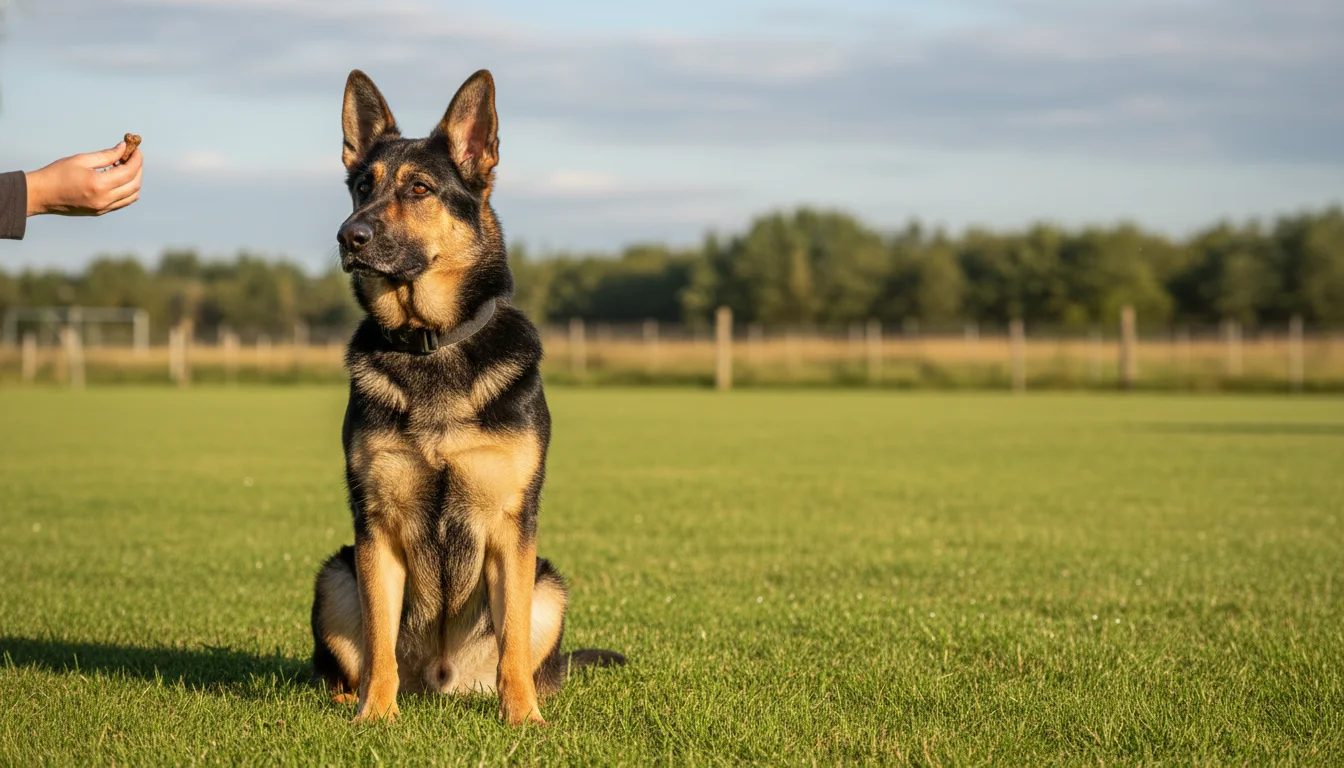
German Shepherd training is one of the most searched training topics because GSDs are so capable — and so capable of becoming a problem without proper guidance. Ranked #3 in dog intelligence (behind Border Collies and Poodles), German Shepherds learn quickly but need a confident, consistent handler. This guide gives you a realistic roadmap from puppy through reliable adult obedience.
The Training Program German Shepherd Owners Use
Step-by-step program designed for breed-specific challenges. Used by 50,000+ dog owners.
German Shepherds are working dogs. They were bred to follow complex instructions, make independent decisions, and persist under pressure. This makes them exceptional training partners — but it also means they will test your leadership. A GSD that doesn't see you as a clear, consistent authority will try to fill that role themselves. That's when you get guarding behavior, resource guarding, and reactivity problems.
The Socialization Window — Make or Break
The socialization window for German Shepherds closes at around 14–16 weeks. What they're exposed to before 16 weeks becomes "normal." Prioritize: children, strangers, other dogs, traffic sounds, vet handling, and grooming. Under-socialized GSDs are the breed most often surrendered to shelters for "aggression" — almost always fear-based reactivity that proper early exposure prevents.
Best Training Methods for German Shepherds
Modern positive reinforcement is the consensus approach. Food rewards work during initial learning; transition to praise and play as commands become reliable. German Shepherds are highly toy-motivated — a ball or tug toy works as well as treats for high-drive dogs. Avoid dominance-based methods: research since 2009 shows alpha training increases aggression and anxiety in dogs, particularly in GSDs.
German Shepherd Training Strengths
Learns commands faster than 95% of breeds
Highly food and toy motivated
Excels at virtually every dog sport and working role
German Shepherd Training Challenges
Needs clear leadership or will test boundaries
Socialization window is critical and time-limited
Adolescent phase (6–18 months) feels like regression
12-Week German Shepherd Training Checklist
Track your German Shepherd's progress through the foundational commands. Check each one as your dog reliably performs it in low-distraction environments.
Get the Complete German Shepherd Training System
Breed-specific training program with day-by-day instructions, video demos, and lifetime access.
Frequently Asked Questions About German Shepherd Training
Are German Shepherds easy to train?
Yes — German Shepherds are among the easiest dogs to train basic and advanced commands. They're intelligent, eager to work, and food/toy motivated. The difficulty is in consistency: GSDs will exploit any gaps in your training and rules.
How long does it take to train a German Shepherd?
Basic commands: 2–4 weeks with daily 15-minute sessions. Full obedience with reliable off-leash recall: 6–12 months. Advanced protection or sport training (Schutzhund/IPO): 2+ years.
At what age should you start training a German Shepherd?
8 weeks — the day you bring them home. Puppies can begin learning sit, down, and crate training immediately. The earlier you start, the easier everything becomes. Waiting until 6 months is one of the most common (and costly) GSD training mistakes.
Why is my German Shepherd not listening?
Most common causes: inconsistent commands across family members, training only in low-distraction environments, insufficient exercise (a tired GSD is an obedient GSD), or adolescence — GSDs hit a teenage phase at 6–18 months where previously learned commands regress.
Disclosure: We earn affiliate commissions when readers buy through some links on this site, at no extra cost to you. Our editorial recommendations are independent.