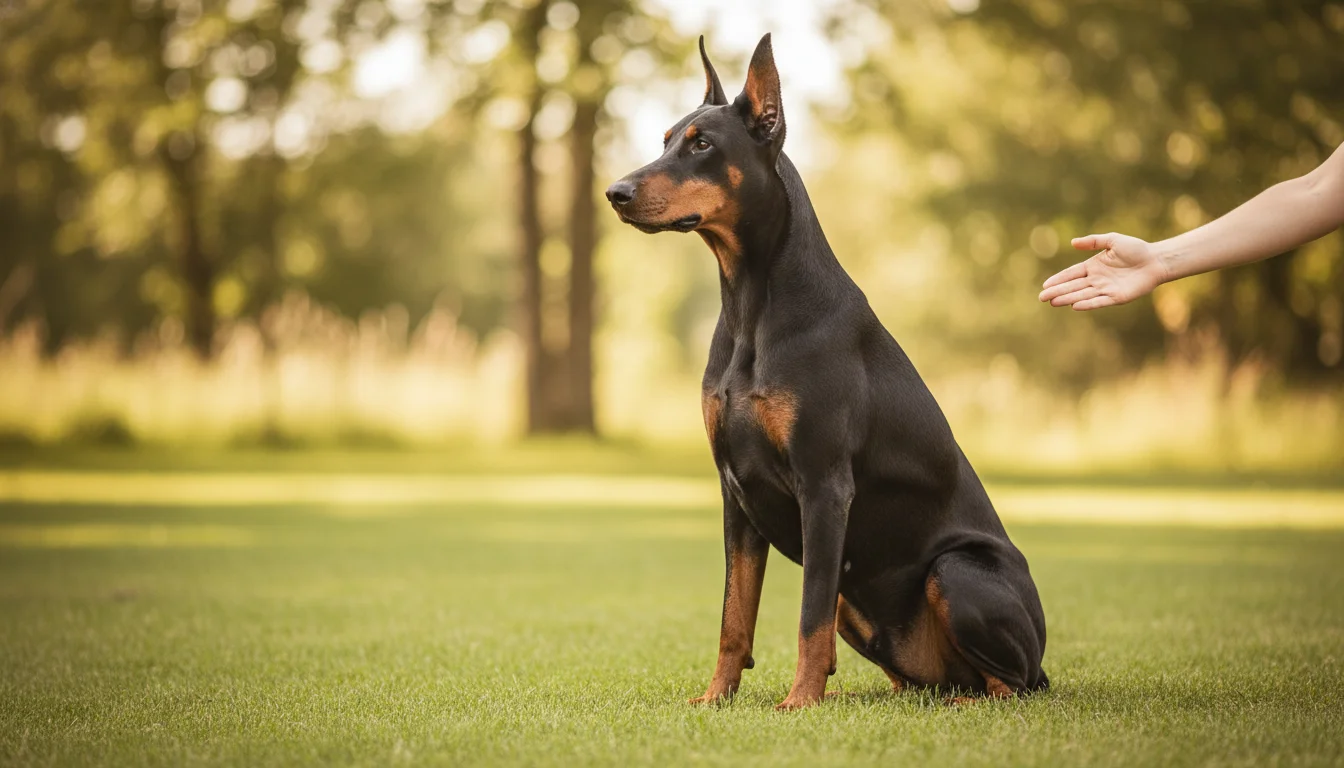
Doberman training is among the most rewarding training experiences with any breed. Dobermans are ranked #5 in dog intelligence, eager to work, and intensely bonded to their families. They are also sensitive, observant, and highly aware of their handler's emotional state — making them exceptional partners for owners who train with consistency and calm energy, and a poor fit for owners who train with frustration.
The Training Program Doberman Pinscher Owners Use
Step-by-step program designed for breed-specific challenges. Used by 50,000+ dog owners.
Dobermans were bred specifically to be trainable working dogs — police, military, and personal protection. Their genetic wiring is to focus on a handler and respond to direction. New commands are typically learned in under 5 repetitions. The challenge isn't teaching them — it's being consistent enough to keep up. Dobermans notice every inconsistency in your rules and will exploit it.
Velcro Dog Management
Dobermans bond intensely and follow their owner from room to room. Without proactive crate training and alone-time conditioning starting in puppyhood, separation anxiety is one of the most common Doberman behavioral problems. Crate train every Doberman puppy, build alone time gradually (5 minutes → 30 minutes → 2 hours), and ensure the dog has structured rest periods every day.
Socialization for a Protective Breed
Dobermans were bred for personal protection — they have natural guarding instincts. Without thorough socialization in the 8–16 week window, those instincts become reactivity. Expose your Doberman puppy to dozens of friendly strangers, calm dogs, and varied environments. Continue exposure through adolescence. Well-socialized Dobermans are confident and discerning; under-socialized Dobermans are reactive and fearful.
Doberman Pinscher Training Strengths
Among the fastest-learning breeds in existence
Intensely loyal and bonded to handler
Excels at obedience, protection sports, and working roles
Doberman Pinscher Training Challenges
Prone to separation anxiety without proactive training
Sensitive to harsh corrections — shuts down quickly
Needs intensive socialization to prevent reactivity
10-Week Doberman Pinscher Training Checklist
Track your Doberman Pinscher's progress through the foundational commands. Check each one as your dog reliably performs it in low-distraction environments.
Get the Complete Doberman Pinscher Training System
Breed-specific training program with day-by-day instructions, video demos, and lifetime access.
Frequently Asked Questions About Doberman Pinscher Training
Are Dobermans easy to train?
Yes — Dobermans are among the top 5 easiest breeds to train commands, and they retain training exceptionally well. The challenge is the handler side: Dobermans require consistency, calm energy, and clear rules to thrive.
When should I start training a Doberman puppy?
8 weeks. Begin crate training, name recognition, sit, and most importantly socialization immediately. The 8–16 week window largely determines whether you have a confident or reactive adult Doberman.
Are Dobermans good for first-time owners?
Borderline. They're easier to train than most large breeds, but their size, drive, and sensitivity to inconsistency make them better-suited to owners with some dog experience or commitment to professional training classes.
How do I prevent Doberman separation anxiety?
Start alone-time training the day you bring the puppy home. Crate them for short, predictable periods even when you're home. Build duration gradually. Never make a big deal of arrivals or departures. Dobermans that learn alone time is normal in puppyhood rarely develop severe anxiety.
Disclosure: We earn affiliate commissions when readers buy through some links on this site, at no extra cost to you. Our editorial recommendations are independent.