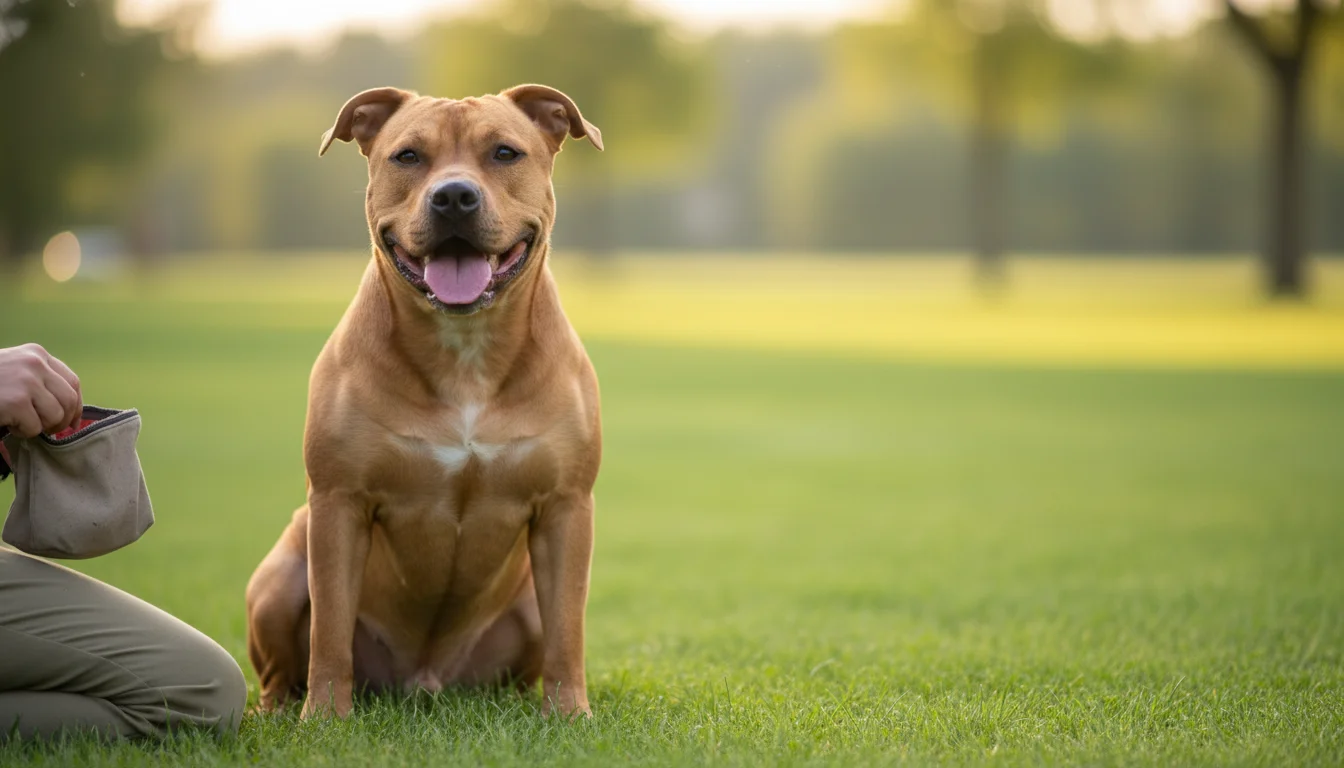
Pitbull training searches spike whenever someone adopts one for the first time and realizes the breed's reputation doesn't match the dog in front of them. Pitbulls — covering American Pit Bull Terriers, American Staffordshire Terriers, and Staffordshire Bull Terriers — are among the most trainable, people-loving breeds in existence. The training challenges they do have are specific, predictable, and manageable with the right approach.
The Training Program Pitbull Owners Use
Step-by-step program designed for breed-specific challenges. Used by 50,000+ dog owners.
The American Temperament Test Society tests dogs for aggression, panic, and reactivity. Pitbulls pass at 87.4% — higher than Beagles, Collies, and many "family dogs." The breed was historically used as nanny dogs. Human aggression was bred OUT of Pitbulls because handlers needed to pull them apart without getting bitten. Dog selectivity is real and manageable. Human aggression in a Pitbull is almost always the result of abuse, fear, or poor socialization — not genetics.
The 3 Pitbull-Specific Training Priorities
1. Socialization (weeks 8–16): Controlled, positive exposures to dogs, people, and environments. The single most important thing you can do. 2. Leash manners: Pitbulls are strong. A 50 lb Pitbull that pulls has enough force to knock an adult over. Start leash training immediately. 3. Dog-dog introductions: Pitbulls can be dog-selective. Teach controlled greetings — on-leash, neutral territory, parallel walking first.
Best Training Methods for Pitbulls
Positive reinforcement dominates for Pitbulls. They're highly food-motivated and people-pleasing — they want to work with you. Aversive methods (shock collars, prong collars, alpha rolls) increase reactivity and fear in high-drive breeds. Short sessions (10–15 min), high-value rewards, and lots of enthusiasm from the handler. Pitbulls respond exceptionally well to clicker training due to their fast learning speed.
Pitbull Training Strengths
Highly food-motivated and people-pleasing
Pass temperament tests at higher rate than most family breeds
Excels at obedience, agility, and weight pull sports
Pitbull Training Challenges
Strength requires early leash training
Can be dog-selective — needs careful introductions
Public perception means owner must be extra careful
12-Week Pitbull Training Checklist
Track your Pitbull's progress through the foundational commands. Check each one as your dog reliably performs it in low-distraction environments.
Get the Complete Pitbull Training System
Breed-specific training program with day-by-day instructions, video demos, and lifetime access.
No — they're one of the easier breeds to train. Pitbulls are intelligent, eager to please, and highly food motivated. The challenge is their strength (leash manners matter early) and potential dog-selectivity (requires management and proper introductions).
Can you train aggression out of a Pitbull?
Dog selectivity (preference to not interact with all dogs) is manageable through training and management, but not fully eliminated in all dogs. True human aggression in a Pitbull is rare and almost always fear-based — professional help is recommended for any dog showing human-directed aggression.
How early should you train a Pitbull puppy?
Day one. The socialization window (8–16 weeks) is especially critical because dog-selectivity is breed-common. Every positive dog interaction in that window is an investment in lifelong manageability.
What's the best leash for a Pitbull?
A standard 6 ft flat leash plus a well-fitted harness (front-clip for pullers). Avoid retractable leashes — they teach pulling. Avoid prong/choke collars — they increase reactivity in this breed specifically.
Disclosure: We earn affiliate commissions when readers buy through some links on this site, at no extra cost to you. Our editorial recommendations are independent.