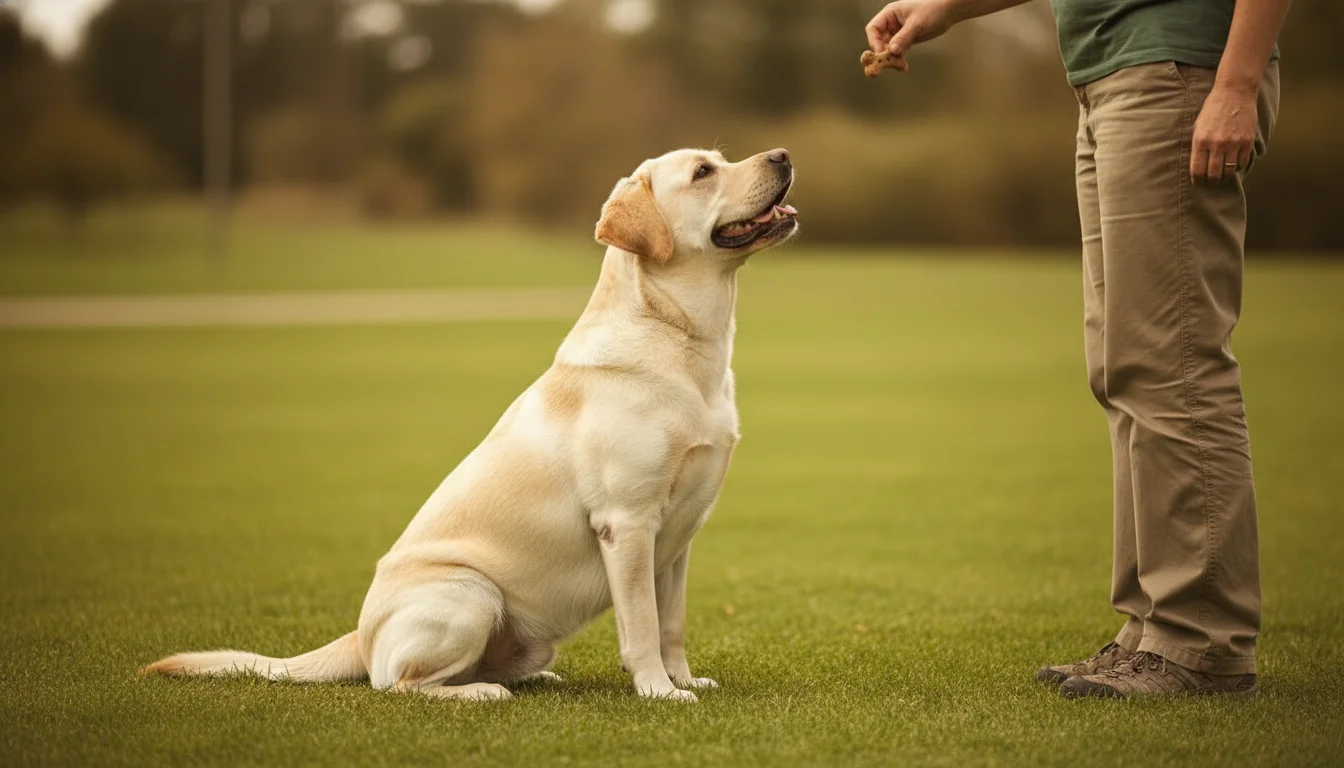
Labrador Retriever training is, on paper, one of the easiest training experiences you can have. Labs are eager to please, food-motivated to a fault, and ranked #7 in canine intelligence. The catch: they're also one of the most excitable, mouthy, food-stealing breeds in existence. The training challenge isn't teaching commands — it's channeling all that enthusiasm into manners that work in the real world.
The Training Program Labrador Retriever Owners Use
Step-by-step program designed for breed-specific challenges. Used by 50,000+ dog owners.
Labs learn commands quickly, work for food, and rarely show aggression. The challenge is impulse control. A Lab will steal food from countertops, drag you down the street to greet strangers, and inhale anything edible (or vaguely edible) on the floor. Training a Lab successfully means prioritizing impulse-control commands (Leave it, Wait, Place) just as heavily as obedience commands.
The Mouthy Puppy Problem
Lab puppies are extreme mouthers — bred to retrieve, they want everything in their mouth. From day one, redirect to appropriate chew toys whenever teeth touch skin. Use a high-pitched "ow!" and immediately offer a toy. Never punish with hand contact (slap, push) — this teaches the puppy that hands are play targets. Most Lab mouthing peaks at 4–6 months and resolves with consistent redirection.
Best Training Methods for Labradors
Positive reinforcement with food rewards — Labs are arguably the most food-motivated breed in existence. Use kibble for low-distraction training, real meat for high-distraction work. Keep sessions short and high-energy; Labs tune out boring repetition. Add play and praise as commands become reliable. Field-line Labs may also be highly toy-motivated — discover which reward works best for your individual dog.
Labrador Retriever Training Strengths
Among the most food-motivated breeds — easy to reward
Forgiving of training mistakes — first-time owner friendly
Excels at retrieving, service work, and sports
Labrador Retriever Training Challenges
Mouthy puppy phase requires diligent redirection
Excitable until age 2–3
Will eat anything — Leave it/Drop it are essential
8-Week Labrador Retriever Training Checklist
Track your Labrador Retriever's progress through the foundational commands. Check each one as your dog reliably performs it in low-distraction environments.
Get the Complete Labrador Retriever Training System
Breed-specific training program with day-by-day instructions, video demos, and lifetime access.
Frequently Asked Questions About Labrador Retriever Training
How long does it take to train a Labrador?
Basic commands: 1–3 weeks of daily 15-minute sessions. A reliable, well-mannered adult: 12–18 months (the breed matures slowly). Advanced retriever or service work: 18–24 months minimum.
Are Labradors good for first-time dog owners?
Yes — Labs are one of the top recommendations for first-time owners. They're forgiving of training mistakes, food-motivated, and rarely show aggression. The main warning: they're much more energetic than people expect, especially under age 3.
How do I stop my Lab from jumping on people?
Universal consistency from every household member. Turn your back when the dog jumps; reward four-paws-on-floor immediately. The mistake most Lab owners make is allowing jumping "sometimes" — that puts the behavior on a variable schedule that's nearly impossible to extinguish.
When should I start training a Lab puppy?
8 weeks. Begin with name recognition, sit, crate training, and bite inhibition. Add Leave it and Drop it by week 10 — you'll need them for the things your Lab puppy will inevitably try to swallow.
Disclosure: We earn affiliate commissions when readers buy through some links on this site, at no extra cost to you. Our editorial recommendations are independent.