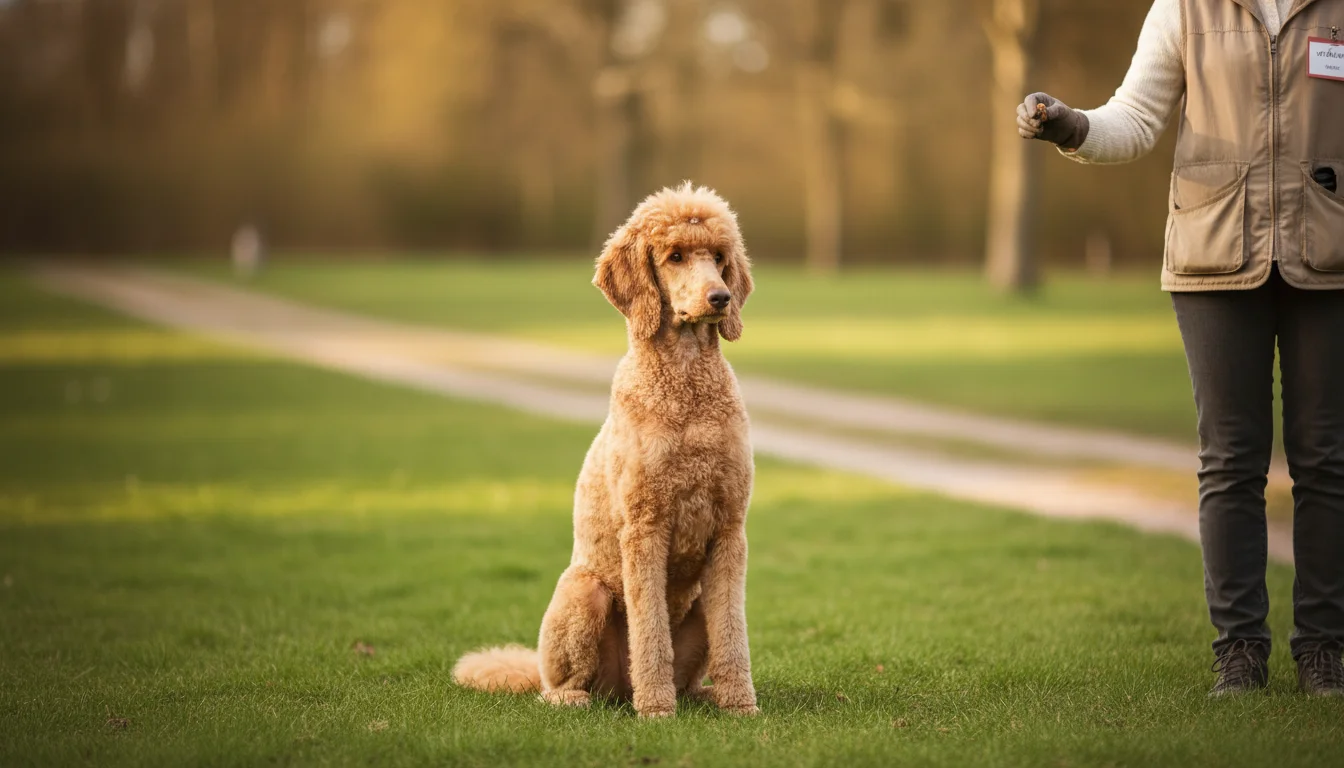
Poodle training is genuinely easy if you commit to it — and impossible if you don't. Poodles are ranked #2 in canine intelligence (behind only the Border Collie), eager to learn, and exceptionally responsive to positive reinforcement. They're also among the most under-stimulated breeds in pet homes, because their show-dog appearance hides what they actually are: high-drive working dogs originally bred for water retrieving.
The Training Program Poodle Owners Use
Step-by-step program designed for breed-specific challenges. Used by 50,000+ dog owners.
Poodles are second only to Border Collies in obedience intelligence. They learn new commands in fewer than 5 repetitions and retain them exceptionally well. The catch: this also means they learn bad habits at the same speed. A Poodle that's allowed to jump on guests once learns that jumping works. Start training from day one and be deliberate about which behaviors you're reinforcing — Poodles notice everything.
Mental Stimulation Beyond Obedience
Standard Poodles especially need real mental work daily — puzzle feeders, scent games, advanced trick training, agility, dock diving. A Poodle that only gets walked and fed will invent its own activities, often involving destruction. Mental work tires Poodles faster than physical exercise; 30 minutes of structured training equals 90 minutes of walking.
Training Methods That Work
Positive reinforcement with a clicker is the gold standard. Poodles are sensitive to harsh corrections — they shut down and lose enthusiasm. Use food rewards initially, then transition to a mix of food, play, and praise. Vary your training environment from the start; Poodles can appear "trained" at home and ignore commands at the park unless you proof across many locations.
Poodle Training Strengths
Among the fastest-learning breeds in existence
Hypoallergenic — low shedding
Excels at every dog sport and working role
Poodle Training Challenges
Requires significant mental stimulation daily
High grooming commitment (every 4–6 weeks)
Sensitive to harsh corrections — shuts down quickly
8-Week Poodle Training Checklist
Track your Poodle's progress through the foundational commands. Check each one as your dog reliably performs it in low-distraction environments.
Get the Complete Poodle Training System
Breed-specific training program with day-by-day instructions, video demos, and lifetime access.
Among the easiest breeds in existence — second only to the Border Collie. Their intelligence, eagerness to please, and sensitivity to handler cues make them ideal training partners. The only caveat: they require mental stimulation, not just obedience drills.
Are Standard, Miniature, and Toy Poodles trained the same way?
Methods are identical across sizes — all Poodles are equally intelligent and trainable. Differences are mostly about session length (Toys tire faster) and exercise needs (Standards require significantly more).
When should I start training a Poodle puppy?
8 weeks. Poodle puppies are ready to learn from the moment they come home. Begin with name recognition, sit, crate training, and bite inhibition. Add formal commands and trick training as early as 10 weeks.
Are Poodles good for first-time owners?
Yes, especially Standard and Miniature Poodles. They're forgiving, eager to please, and quick learners. The main consideration is grooming commitment (Poodles need professional grooming every 4–6 weeks) rather than training difficulty.
Disclosure: We earn affiliate commissions when readers buy through some links on this site, at no extra cost to you. Our editorial recommendations are independent.